It’s four o’clock in the morning and your phone screen glows in the dark. Somebody you’ve never met has posted a picture of rose petals floating in a bath under the caption ‘self-care time’. You rub your eyes, think of the day ahead and scoff, ‘Fine, but who’s coming to sit with Dad while I light the candles?’
That post captures the gap between the beauty-catalogue version of self-care and the boots-on-the-ground reality of actually taking care of yourself while being a carer. But how do we close that gap, without platitudes and without pretending the work is anything less than hard?
The trouble begins with advice that is both true and useless: get more sleep, eat well, make time to rest. Of course those things help, but generic tips land like a joke when you’re running on empty and negotiating a wheelchair into the back of a taxi. Bubble-bath aesthetics and four-hour yoga routines can just look unrealistic for somebody with the demands of a busy life or a caring responsibility.
Of course, with experience of being a carer and supporting carers myself, I know that what would help most is fewer demands. If we’re realistic, though, for many carers, that is an impossibility. What we need then are real-world tools — methods sized to the messiness of real life.
Psychologists Drs Paul and Eve Ekman describe burnout in three escalating layers, and anyone who has cared for another person will recognise the first: emotional exhaustion. This happens when the emotions you’re navigating day to day become too laborious. It creeps in when you mask your fear and pain with a polite smile once too often, or when the ‘negative rub-off’ of another’s pain seeps into your own nervous system. You lie down at night and the mind is still running triage.
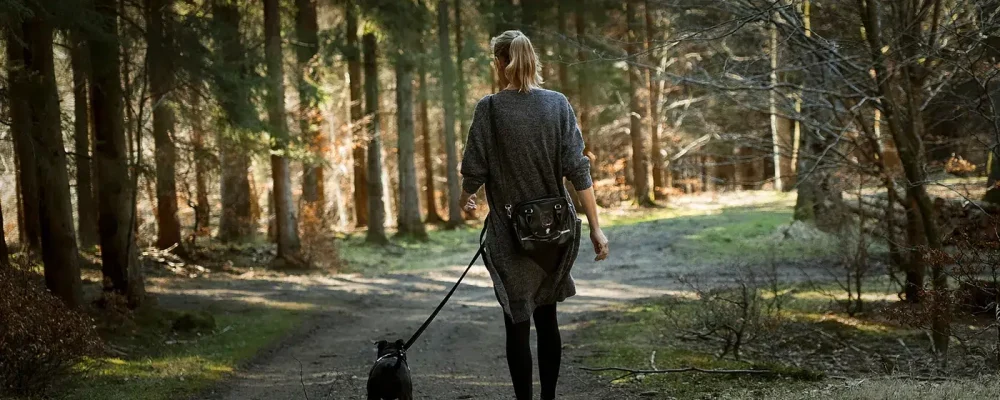
At this point the body isn’t asking for a holiday in Bali; it is begging for rest. Rest can come in many forms, some possible, some impossible. It could be a walk with the dog, an online class, a podcast, or a nap. I encourage you to find it where you can, neglecting it at your own risk. Rest can be as small as a few, deliberate mindful breaths: inhale through the nose, exhale fully, then pause on empty and let the shoulders drop. This may read like more silly advice to you, but I can say for certain that five of those cycles sprinkled through the day do more for the parasympathetic brake than another doom-scroll.
If exhaustion is ignored, a second layer appears: the sense that none of it matters. A carer told me she was ready to quit because the person she supports ‘never says thank you, never improves, just complains.’ We asked how many times that week she had had success – how many times had she prevented a fall, booked an appointment, or coaxed a laugh. She blinked, counted some small victories, then admitted she had been ‘focusing on the two per cent that went wrong’ while missing the ninety-eight per cent that went right. As she focused on the wins she reclaimed her sense of meaning and purpose. She recognised that while it was hard work, and she needed to give herself a break and a dose of kindness and compassion, it was work worth doing.
Left untreated, however, exhaustion plus futility hardens into a third layer: numbness, emotional shutdown. I have known good carers who became brusque, even cruel at times, not because kindness dried up or because they were a bad person, but because feeling anything at all was no longer an option. Years ago I reached that edge myself: totally overwhelmed by suffering, I sank into a pit of ‘What’s the point?’ and lost touch with both my empathy and any feeling of joy. Buddhism names this dark bottomless pit despair, the near-enemy of genuine compassion. It is called a ‘near enemy’ because it wears compassion’s coat – I see your pain and don’t want you to experience pain – yet offers no movement, no help, no energy or fire, as authentic compassion does. It feels hopeless, despondent, disillusioned. It makes us inert, no longer able to benefit the other, or ourselves.
The antidote is found in the Buddhist mind training tradition’s ‘law of opposites’: each affliction has a specific antidote. For anger, cultivate patience and compassion; for craving, practise contentment. For despair, we are encouraged to pair that initial spark of empathy – I feel your pain – with the power of the heart that says, ‘May you be free of it, and I will help’. The thought of how to help might land on something that feels tiny and insignificant – adjust a pillow, fetch a glass of water, send a text to the district nurse – but tiny can be enough. Channel a drop of energy into one doable act and despair, which had all but given up, begins to lose its grip. As we often say, it’s far better to channel our energy into the little something we can do, than to fall into despair, focusing on all that we can’t do, rendered helpful to no one.
Sometimes the medicine is gentler still. When an unpleasant emotion surfaces – resentment, shame, deadened fatigue – the practice from Tsoknyi Rinpoche is to picture extending a hand to your feeling. No agenda – not trying to get rid of it, or heal it – just ‘Hello’. That simple handshake, as he calls it, allows the feeling to exist without flooding the system. In that space of acceptance can arise understanding, kindness, and self-compassion. This is one way how a frozen heart can thaw and become alive again.
All of this collapses if compassion stops at you. Many carers hold themselves to impossible standards – to never get angry, to never make a mistake, to never feel burdened – and berate themselves when reality doesn’t match up. Try swapping places in your imagination: a friend arrives confessing the same worries and troubles you hold in secret. Would you answer with the same judgmental monologue you give yourself? If not, why is it okay to speak to yourself in that way? Compassion, in the Buddhist tradition, is complete only when it is boundless. It is boundless only when it includes all sentient beings. You are one of all sentient beings. Caring for others’ pain while ignoring your own is missing a piece of the puzzle.
During a recent session held for carers, I asked the individuals attending to write in some brief advice they would give to someone taking on a caring role. Here are just a few: ‘Make space for pockets of peace,’ ‘Don’t be hard on yourself,’ ‘Take care of yourself first so you can be present for the person you’re caring for,’ ‘You’re going to want to scream some days, but some days you will dance,’ ‘Don’t forget yourself,’ ‘Do something that makes you happy as much as possible,’ ‘You definitely matter,’ ‘Find some really good support.’
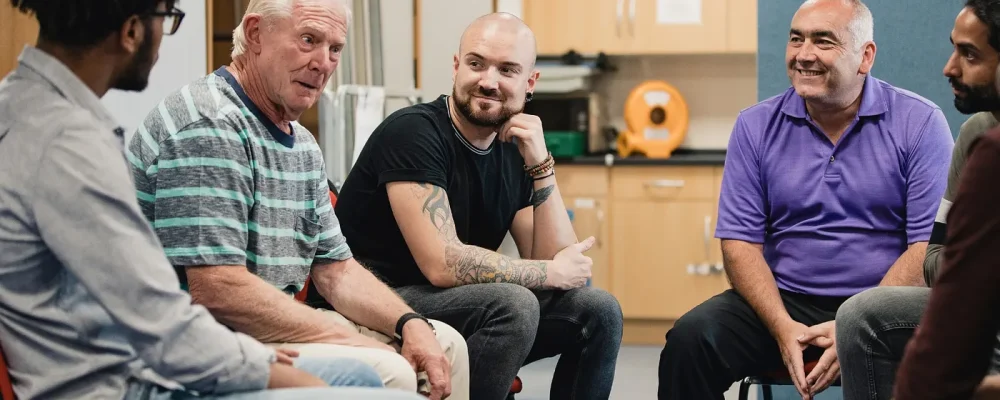
Spending time chatting with others who get what you’re going through is so important. Isolation magnifies stress, so seek out or build circles where you can be real – a carers’ walking group, an online meditation class, a neighbour who understands the code-word ‘cuppa?’.
Notice, finally, how in the advice from other carers, rest has returned as a theme. We joked about the ‘self-care’ often shown on social media – all the luxurious bubble baths and spa days – only because those images miss the deeper meaning. They focus on the accessories of relaxation rather than the true essence of what it means to care for oneself, especially when you’re a carer. Real rest is the moment your shoulders relax, your brow unfurrows, and your jaw unclenches. A bath can certainly help you with that. For carers, however, it’s often the small moments of rest and play that build up. It is tailored, not Instagrammable, and it works precisely because it fits the life you already live.
None of this makes caring easy. The work will still wake you up before dawn, and some mornings the phone will still show petals floating in someone else’s bath, luxuries you feel you can’t access. Yet the work you do is profoundly meaningful – a beautiful act of love, dedicating yourself to another’s welfare. It takes massive amounts of compassion, courage, and selflessness to do it. I hope that you remember this. I hope that you include yourself in the circle of compassion and find good friends to lean on. May you find the strength to continue, in an imperfect, yet steady way.