Who Was the Buddha? Life, Teachings, and Legacy
Siddhartha Gautama, who later became known as the Buddha, was born an ordinary man, and his life story is one of a prince who gave up luxury to find the truth. Why? Because he came face to face with the reality of pain and suffering and refused to accept that nothing could be done about it.
Some details of his life story vary depending on how they are told, but the essence remains the same. His story and teachings remain relevant to us today because we all come face-to-face with pain and suffering in our own way.
“The world we live in is very different from the world at the Buddha’s time, yet we human beings have the same afflictions and still experience physical and mental suffering.” — His Holiness the Dalai Lama, The Library of Wisdom and Compassion.
Birth and Early Life
Siddhartha Gautama was born about 2,600 years ago in Lumbini (in present-day Nepal, near the Indian border). He was born into a royal family known as the Shakyas and raised as a prince. It is said that from an early age, he was bright, compassionate, and curious.
He was born into a spiritually vibrant time, where wandering mendicants, seekers and teachers were abundant. A wandering sage told a prophecy to his parents: that Siddhartha would either grow into a great king or a great spiritual teacher. His parents, of course, hoped for him to be a great ruler.
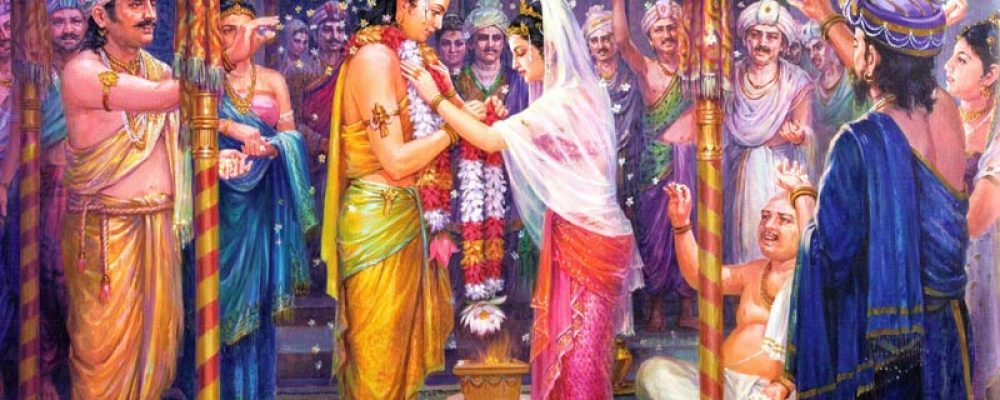
To prevent him from seeking a spiritual life, they thought to keep him away from the reality of suffering and pain. They surrounded him with every comfort. Wealth, pleasure, entertainment, arts, and fine education were all that he knew. They shielded him from any examples of sickness, old age, or death. He excelled at everything he put his mind to, including archery, which is how he impressed his future wife, Yasodhara. By all ordinary measures, the story could have ended there: a brilliant prince with a wife and child, growing into a wise and skilled leader.
The Four Sights
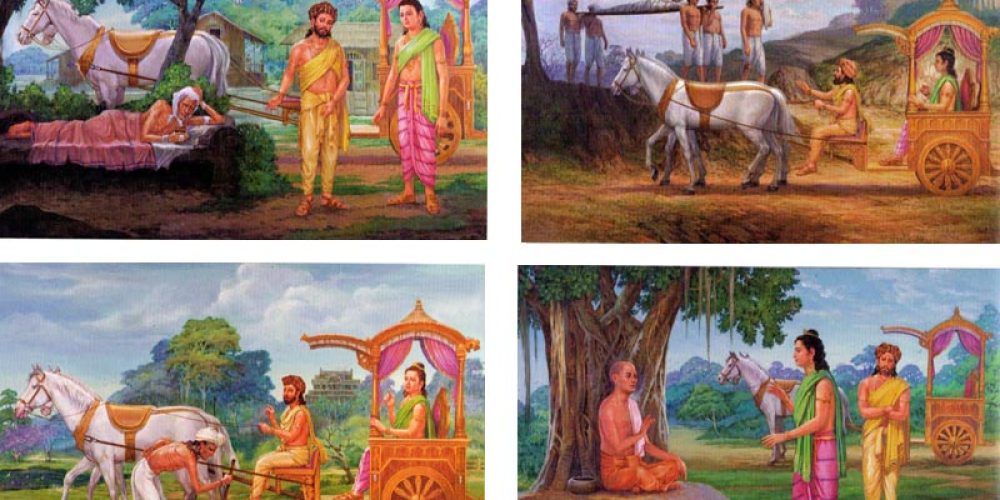
At age 29, Siddhartha, on excursions beyond the protective walls of the palace, encountered (in various tellings, on one outing or over several) what are now called the “four sights.” These encounters changed the direction of his life.
1. A sick person
2. An old person
3. A corpse
4. A spiritual man in meditation
The first three were a profound shock. For the first time, he came face to face with and realised that sickness, ageing, and death would come to everyone, no matter how rich or powerful. He felt pained that everyone he loved, all the people he ruled over, would all succumb to this suffering, and that there was nothing he could do about it.
The fourth sight, a spiritual man, made him feel different. The calm and centred demeanour of the spiritual man moved him. Something in this man’s presence made him feel there might be a way to free yourself of this suffering.
Leaving the Palace
Troubled by what he had seen, Siddhartha decided he could not stay in a life of luxury, knowing everyone would eventually experience this suffering. He needed to find answers. He needed to find liberation from suffering. One night, he left his home, his position, possessions, wife, and even his newborn child. He cut his hair and set out as a wandering seeker, determined to find the truth.
Seeking Teachers
For the next six years, Siddhartha studied under some of the most respected spiritual masters of his time.
First, he studied with two masters of samadhi and personally mastered profound states of meditative absorption known as jhanas. These experiences were blissful, profound, and expansive, yet he felt they did not provide ultimate liberation. They were temporary. Because of his natural proficiency, these masters asked him to stay and teach, but he decided to leave; he had not found what he was looking for.
He then tried several other spiritual practices popular at the time, before turning to severe asceticism, joining a group of practitioners who pushed the body to extremes of hunger and pain. Siddhartha went further than most, reducing himself to skin and bone. He gained five followers, who were impressed by his dedication. But in the end, he found that this too brought no freedom.
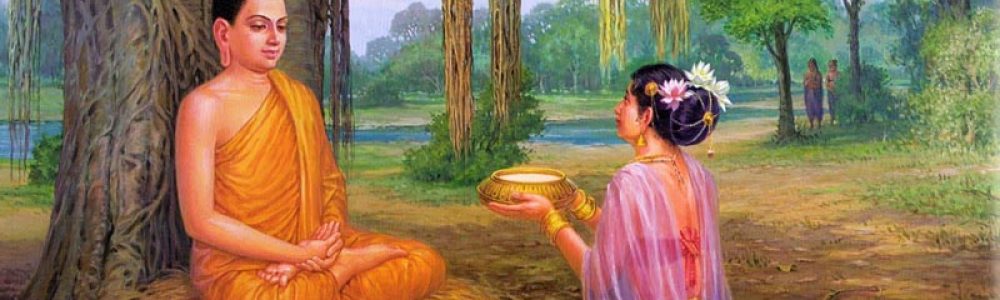
At last, weakened and close to death, he accepted food from a kind villager. His five followers were disgusted and left him. But, as he regained his strength, he realised that neither extreme luxuries nor extreme austerities was the answer. Perhaps what was needed was a middle way.
Under the Bodhi Tree
Siddhartha, now aged 35, sat contemplating. A childhood memory came to mind. A time in which he was resting, under the cool shade of a rose apple tree, while his father worked in the fields. He recalled how, at that time as a child, he naturally entered into the first jhana (the first of the meditative absorptions). He remembered how in this first jhana, he had a calm, balanced, poised, sharp, and serviceable mind.
The thought arose, “Might that be the way?” What if, instead of chasing more rarefied states of samadhi, he stabilised this clear, balanced attention (shamatha) and used it to investigate the reality of experience (vipashyana)? The answer came back to him; this indeed was the way.
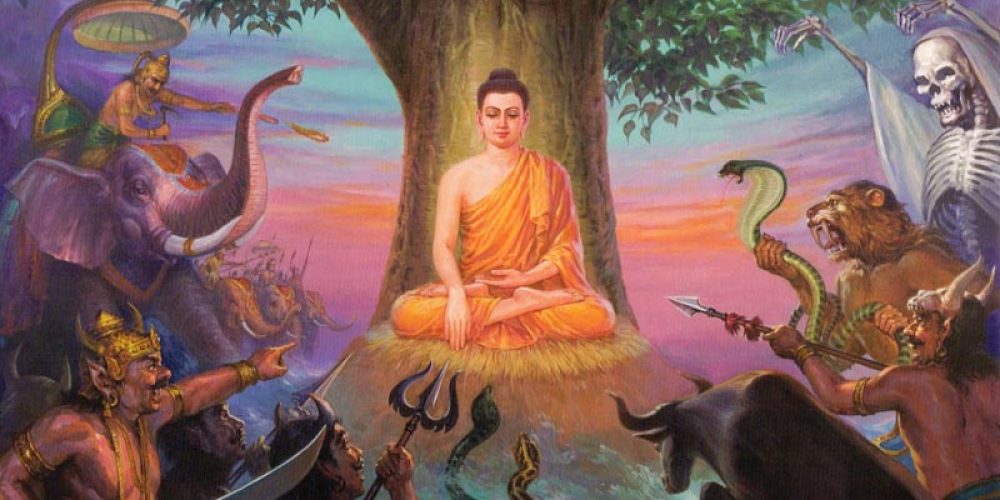
Then, at Bodh Gaya, under a fig tree now known as the Bodhi Tree, Siddhartha sat in meditation. He resolved not to rise until he had found the truth. He started with mindfulness of breathing, the same simple practice many of us start with today, and continued beyond.
He faced Mara and his armies, the so-called “demon tempter” who represents obstacles such as craving, ill-will, fear, and delusion. (While often portrayed as an evil demon king, Mara can be understood as a metaphor for the inner psychological afflictions that prevent spiritual progress.) Rather than giving in to the hordes of mental afflictions, he remained steady, and he touched the earth. This is a gesture you see on many Buddha statues, one hand touching the earth, calling the earth to witness his steadfastness and determination.
During the night of his awakening, three great insights are said to have unfolded:
• In the first watch, he saw his countless past lives.
• In the second, he saw the endless cycle of beings reborn according to their actions (karma).
• In the third, he saw the nature of suffering and its causes, which became known as the Four Noble Truths.
At dawn, the work was done. Siddhartha Gautama became the Buddha, which means “awakened one” – awakened in the sense of waking from a terrible dream, where you realise the true nature of all that appeared to be real.
Teaching the Dharma
Out of compassion, the Buddha went to Deer Park in Sarnath and found the five ascetics who’d left him. There he “turned the wheel of Dharma” for the first time, teaching the Four Noble Truths (also known as The Four Truths of the Aryas):
1. The truth of suffering (dukkha).
2. The truth of the causes of suffering (samudaya).
3. The truth of the end of suffering (nirodha).
4. The truth of the path to the end of suffering (marga).
That path the Buddha outlined is the Noble Eightfold Path: right view, right intention, right speech, right action, right livelihood, right effort, right mindfulness, and right concentration. (This can also be translated as “authentic view, authentic intention…” as “right” in this context refers to being authentic to reality, rather than a subjective distinction between right and wrong.)
Every school of Buddhism, no matter how different they may appear, comes back to these essential truths.
A Teacher for All
The Buddha spent the next 45 years walking across northern India, teaching all who wished to listen – kings, farmers, merchants, monks, nuns, and criminals alike. One of the Buddha’s radical qualities was his openness. He allowed anyone, regardless of caste, gender, or status, to join the sangha, the community of practitioners. He even welcomed his aunt and other women as nuns, something unusual for the time.
One discourse captures the Buddha’s non-dogmatic approach: the advice to the Kalamas. Confused by advice from competing teachers and wanderers, they asked the Buddha how to know what to follow. He didn’t say “trust me.” He said, in essence: don’t be led by hearsay, tradition, charisma, or even logic alone. Investigate the teachings. Test them:
Don’t be led by reports or tradition or hearsay. When you know for yourself that certain things are wholesome and good, then accept them and follow them. — The Buddha, Kalama Sutta (paraphrase)
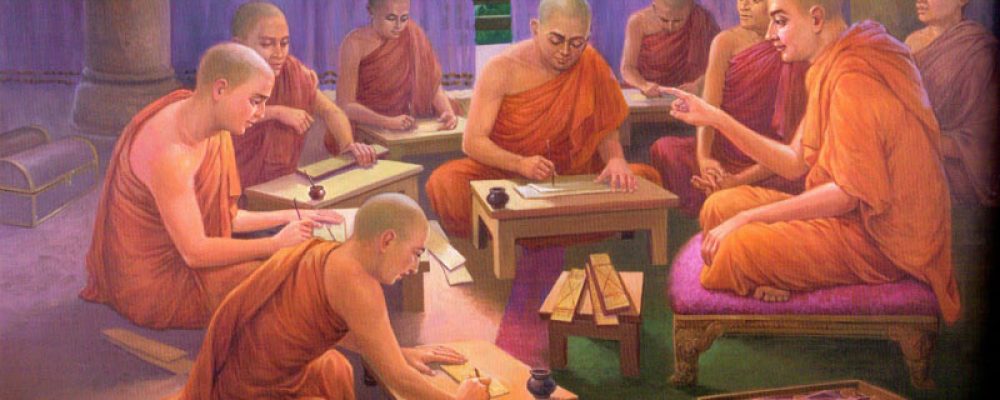
Over his lifetime, he also set down guidelines for ethical conduct, known as the Vinaya. These grew organically as situations arose and have helped the sangha survive and continue to this day, providing both ordained practitioners and householders with guidelines for embodying the teachings.
Stories of Wisdom and Compassion
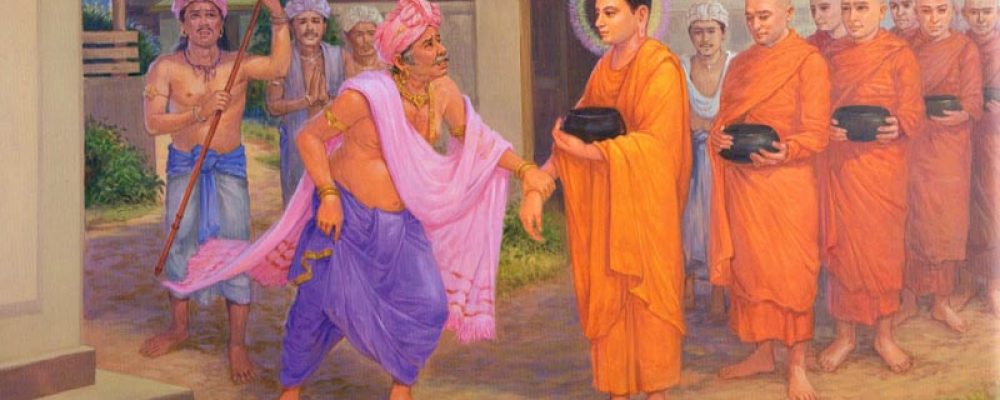
Many stories illustrate the Buddha’s compassion and profound ability to inspire transformation. One tells of Angulimala, a murderer who wore a garland of fingers from his victims. The Buddha met him, helped pacify his anger and hatred, and guided him to a life of practice. This shows that even someone who has committed great atrocities is capable of transformation.
Another well-known story is of Kisa Gotami, a grieving mother who begged for her dead child to be restored. The Buddha asked her to bring a mustard seed from a house untouched by death. She found no such house, and through that search came to see that suffering is universal, and found comfort in shared experience. This realisation helped her work through her grief.
These stories show us that the Buddha’s teachings were always practical: aimed at reducing suffering through wisdom and compassion.
The Pali canon contains some stories that may seem impossible or a complete stretch of the imagination. How should these be interpreted? While some take them literally, others view them as teaching stories. A balanced approach would involve a wise curiosity. Given that Buddhism describes our experience as “like a dream”, constructed and conditioned, it’s not surprising that the tradition uses such examples to convey the teachings. Regardless of how we interpret these stories, the core messages remain: hatred and craving can be overcome, and the mind can be trained.
Final Years and Legacy
The Buddha passed away around the age of 80 in Kushinagar. Having already attained enlightenment, his passing is called mahaparinirvana.
After his death, two of his foremost disciples took the lead in preserving the teaching: Upali recited the monastic code (Vinaya); Ananda, the Buddha’s attendant and cousin, recited the discourses (Sutta). In time, these formed the core of what became known as the Pali Canon (Tipitaka).
Later generations systematised analyses of the mind and phenomena (Abhidhamma), and in other regions and languages, new sutras and commentaries emerged as Buddhism spread to places such as Sri Lanka, Southeast Asia, China, Korea, Japan, Tibet, and eventually, the West. The main branches of Buddhism today are the Theravada, Mahayana and Vajrayana.
Different societies adopted practices according to their culture, giving rise to the various expressions we find – for example, the stripped-back look of Zen versus the colourful nature of Tibetan Buddhism. What unites them is the same core path the Buddha first taught: know suffering, know its causes, realise it can cease, and walk the path that brings about liberation.