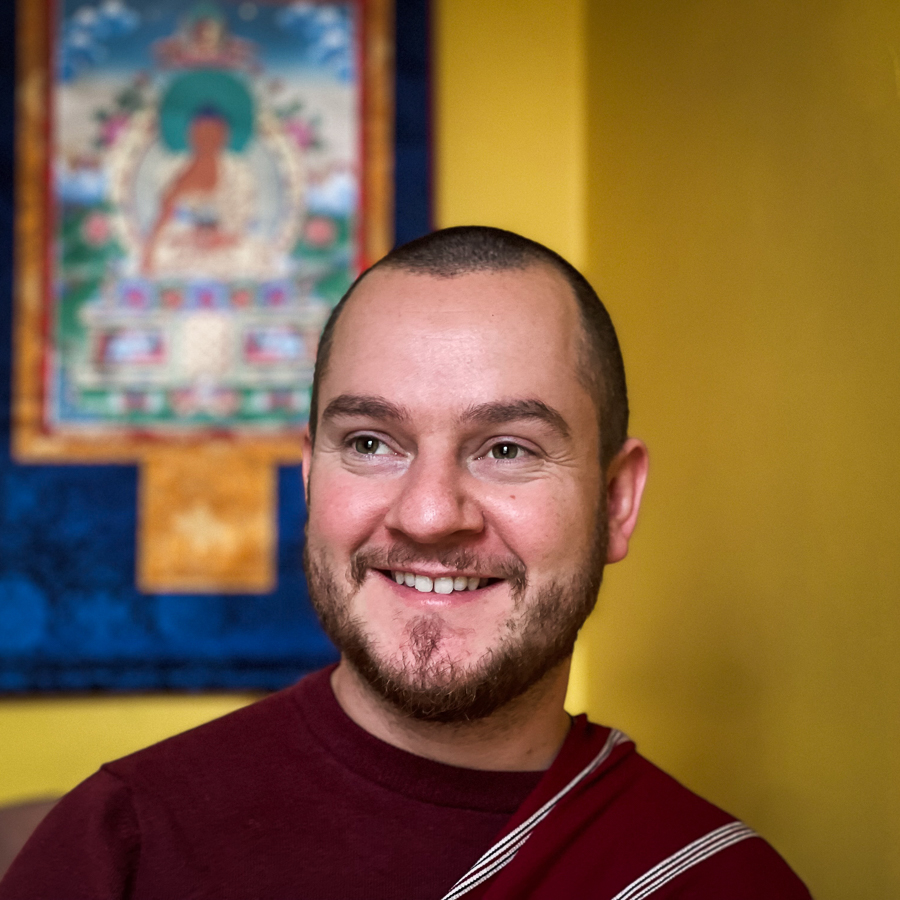
When husband-and-husband team Manu and David founded Samadhi, they didn’t set out to create an “LGBTQ+ Buddhist organisation.” They set out to create a space where the teachings and practices that changed their lives (Buddhism, psychology, yoga) could be shared freely, without barriers, and where everyone felt they belonged. The fact that they happen to be two openly gay men leading that space is simply part of who they are, and it turns out, it was more important than they first realised.
They met in Liverpool over nine years ago, and their shared journey eventually led them to founding Samadhi together. It was David’s background in Buddhist meditation and psychology, and Manu’s passion for yoga and our relationship with the natural world that fed into the vision. From the very beginning, the question was never “how do we make Buddhism inclusive?” It was more that they couldn’t imagine offering it any differently.
But they’ve come to understand that for many LGBTQ+ people, walking into a spiritual or religious space carries a weight that others may not feel. There’s an unspoken sense of wondering if you will be welcome as you are.
This article is David and Manu’s answer to that question, and an honest look at what Buddhism actually teaches about identity, sexuality, and belonging.

What does Buddhism actually say about LGBTQ+ people?
Here’s what might surprise you: remarkably little.
The Buddha’s core teachings – the Four Noble Truths, the Eightfold Path, the cultivation of compassion and wisdom – are all about the nature of our suffering and how to overcome it. They address the workings of the human mind, not the specifics of who you love or gender identity.
The third precept, which is the ethical guideline most often raised in discussions about sexuality, simply asks practitioners to refrain from causing harm through sexual conduct. That precept is about your intentions, actions, and not causing suffering to others, not about the gender of the people involved. The Buddha’s emphasis was always on our actions and the motivations behind them, i.e. are we acting out of kindness or out of hostility? Are we causing harm or acting out of care?
As others have reflected, Buddhism places far less emphasis on sexuality as a moral issue than most other spiritual traditions. What matters is not harming ourselves and others through our conduct. This is a principle that applies equally to everyone, regardless of orientation or identity.
Where tensions have arisen historically, and they have, they tend to reflect the cultural contexts in which Buddhism was practised rather than the Buddha’s own teachings. Some later commentarial texts, particularly those influenced by the social norms of medieval India, introduced restrictions that weren’t present in the earliest teachings. These are cultural additions, and actually, we feel, aren’t really in tune with the spirit of the Buddha’s message.
The Pali Canon – the earliest collection of the Buddha’s recorded teachings – contains no guidance for lay people regarding sexual orientation or same-sex relationships. And the monastic code asks all ordained monks and nuns to refrain from sexual activity entirely, regardless of who they might be attracted to.
This is an important distinction. When we encounter conservative attitudes toward LGBTQ+ people in certain Buddhist communities today, we’re usually seeing the influence of local culture and later commentarial tradition rather than anything the Buddha himself taught. Buddhism, at its heart, is a path of liberation from suffering, and that path is open to everyone.
What does LGBTQ+ involvement in Buddhism look like worldwide?
Across the world, LGBTQ+ individuals are finding their place in Buddhist communities. Research shows that LGBTQ+ people find higher levels of acceptance from Buddhists than followers of most other religious traditions, and this is reflected in the growing number of inclusive communities, publications, and teachers.
A number of Buddhist organisations across the UK and beyond are creating spaces where queer practitioners can explore the dharma without having to compartmentalise their identity.
Prominent teachers have also been quite vocal. Thich Nhat Hanh, the beloved Zen master, for example, was a consistent advocate for LGBTQ+ inclusion. And in Europe, the European Buddhist Union has voiced clear support for LGBTQ+ rights. There’s also a growing body of scholarship that is exploring how queer perspectives can enrich and refresh Buddhist practice for everyone.
Something is changing, and it’s beautiful to be a part of.
How is Samadhi different?
There are several wonderful LGBTQ+ Buddhist groups in the UK, and we’re glad they exist. Most of them operate as subgroups within larger organisations, such as an LGBTQ+ group within a larger centre or an affinity group that meets monthly. They serve an important purpose for queer people searching for community.
Samadhi is a little different. We’re not an LGBTQ+ group within a Buddhist organisation; we are an LGBTQ-led Buddhist organisation. Our identity as gay men isn’t something on the side; it’s just in the fabric of everything we do, whether it’s retreats or online classes.
What does that actually mean in practice? It means it’s not a footnote or policy tucked away somewhere; it means the people guiding the practices, leading your retreats, and teaching you about the Four Noble Truths are themselves members of the LGBTQ+ community. It means that when you join one of our events, inclusion is where we started, not a goal we’re aiming for.
We’re also non-sectarian. This approach means we’re free of some of the more restrictive historical attitudes toward LGBTQ+ people that come from specific lineages or commentarial traditions. Our approach, rooted in the teachings of our spiritual patron, Lama B. Alan Wallace draws from across Buddhist traditions and Eastern and Western psychology and neuroscience, allowing us to focus on the core teachings and practices that actually help.
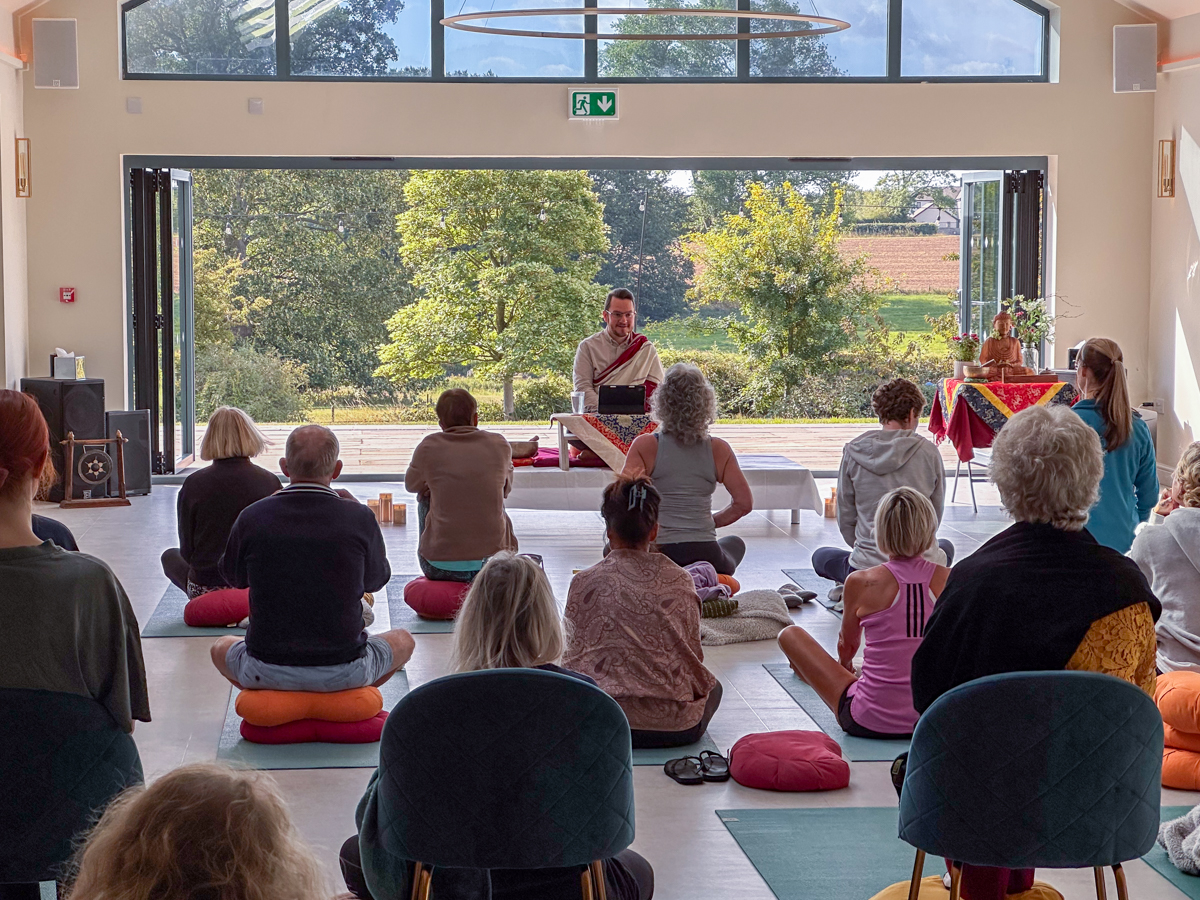
What does the inclusion in Samadhi community feel like?
We could talk about inclusion in the abstract, but the truth is best told by the people who’ve experienced it.
Recently, one of our trans participants who came to one of our retreats told us afterwards that they hadn’t felt welcomed or safe in other spiritual settings – that in other spaces, their identity always seemed to be a thing. With us, it simply wasn’t. They could just practise. They could just be part of the group, like anyone else. Before they came, we made it clear to them that they would have our full support should any issue ever arise.
That’s what we’re aiming for: a space where your identity is honoured, so you can get on with the real work of meditation and inner transformation. Because that’s what you’re actually here for.
Our community includes people of different backgrounds, orientations, gender identities, ages and cultures. Most of our participants aren’t LGBTQ+; they simply value practising in a space that takes kindness and non-judgement seriously. When the people leading an organisation have themselves navigated the experience of being different, it tends to create a culture where everyone feels a little more at ease.
You can experience this for yourself at our free Sunday meditation sessions, where you can drop in without any commitment and see how it feels. There’s no pressure to share anything about yourself that you don’t want to. You’re welcome as you are.
We have also started an LGBTQ+ WhatsApp group for those looking for that shared space outside of the main chat groups (we don’t put the link publicly online, so please just reach out on WhatsApp for the link).
Can Buddhism offer a path of healing for LGBTQ+ people?
A number of LGBTQ+ people come to meditation and Buddhism carrying specific wounds. Sometimes this can be internalised shame from growing up in a society that questions your identity, the hypervigilance of constantly assessing whether a space is safe, the grief of broken family relationships, or the exhaustion of code-switching between your authentic self and the version that seems safe around others.
Buddhism offers remarkably helpful methods for this kind of pain. The practice of shamatha (tranquillity) meditation, first of all, teaches us to settle the agitated mind and find a place of calm that isn’t dependent on external validation. The cultivation of the four immeasurables – loving-kindness, compassion, sympathetic joy, and equanimity – directly addresses the patterns of self-criticism, shame, isolation and loneliness that many of us know intimately.
The Buddhist teaching on the “second arrow” can be especially relevant. The Buddha taught that when we experience pain (the first arrow), we often compound it by adding layers of narrative, self-blame, and rumination (the second arrow). For LGBTQ+ people, the first arrow might be an experience of prejudice or exclusion. The second arrow is the story we tell ourselves about what it means, how we’re somehow wrong, broken, or undeserving. Meditation and the psychology of the teachings help us see the second arrow for what it is and gradually learn to put it down.
We’re not using Buddhism to “fix” anything about our identity. Your identity doesn’t need fixing. In fact, the deeper teachings of Buddhism poke holes in the idea that identity is fixed and show how identities are nothing more than conventions, and therefore fluid, flexible, and able to adapt.
The practices we teach are primarily about developing the inner resources – the mental clarity, emotional resilience, and self-compassion – to live fully and freely as exactly who you are.
Practical ways to get involved
If this article has sparked your interest, here are some ways to explore further:
Join our free Sunday meditation sessions — These take place online every Sunday morning and are a perfect, no-pressure introduction. You’ll experience a guided meditation, a short talk, and some friendly group discussion. No experience necessary, and you don’t need to commit to attending every week.
Explore The Buddha’s Path — Our foundational study programme covers core Buddhist teachings over multiple modules, from the Four Noble Truths to emptiness and engaged Buddhism. It’s entirely donation-based, so cost is never a barrier.
Come to a retreat — We run retreats across Wales, Devon, Lincolnshire, and London, ranging from gentle relaxation day retreats (perfect for complete beginners) to our annual seven-day silent retreat. Every retreat is run with the same spirit of welcome and belonging.
Listen to The Samadhi Podcast — Free guided meditations, dharma talks, and discussions you can listen to anywhere. A great way to get a sense of our approach before joining a live session.
Join our WhatsApp community — Connect with like-minded people in our online community group for ongoing support, discussion, and friendship. (Get in touch for the link for the WhatsApp groups)
Frequently asked questions
Is Samadhi an inclusive organisation? Absolutely. Everyone is welcome regardless of sexual orientation, gender identity, or any other characteristic. Our community includes people of all backgrounds. Being LGBTQ-led simply means that inclusion is built into everything we do.
Is Buddhism against homosexuality or being transgender? The Buddha’s core teachings do not address sexual orientation or gender identity or make them moral issues. Where restrictive attitudes exist in certain Buddhist communities, they reflect cultural traditions and later commentaries rather than the Buddha’s own words. Buddhism’s ethical framework centres on not causing harm, a principle that has nothing to do with who you love or how you identify. The Buddhist teachings also take a helpful view of identity, showing that identity is not fixed and can change.
I’ve had bad experiences with religion. Will this feel religious? Our retreats and classes focus on practical meditation techniques and psychological wellbeing. You don’t need to adopt any beliefs, chant anything, or call yourself a Buddhist. We present the teachings as practical tools for living well, and you’re free to take what resonates and leave the rest.
Are your retreats safe for trans and non-binary people? Yes. We welcome people of all gender identities without question. Our retreat environments are set up to be comfortable for everyone, and our team is here to support you. If you have specific needs or concerns, please reach out to us. We’re happy to discuss anything in advance.
What style of meditation do you teach? We primarily teach shamatha (tranquillity) and vipashyana (insight) meditation from the Buddhist tradition, along with practices like loving-kindness and compassion meditation. Our co-founder Manu also offers yoga sessions on retreats. You can learn more about our approach on our about page.